Short answer
Adobe reports that AI-driven referrals to retail sites rose 12 times between July 2024 and February 2025, according to Adobe's generative AI referral traffic report. As that traffic grows, the best Peec AI alternatives depend on what a team needs to measure. Dedicated trackers such as Kliqo AI, Otterly.AI and Rankscale run buyer prompts across AI engines. Semrush, Ahrefs and Surfer add AI tracking to existing SEO work.
On this page
A useful shortlist starts with the buyer questions that matter, then compares engine coverage, prompt limits, recommendation tracking and crawler diagnostics. One limit applies to every tool on the list. AI software recommendations change between repeated runs of the same prompt, so a single manual check cannot support a buying or content decision. Nightly, scheduled tracking is what turns scattered answers into comparable evidence.
Each tool below is grouped by the decision a buyer faces. Prices, prompt units and add-ons differ, so headline entry prices are not directly comparable.
1. Kliqo AI#
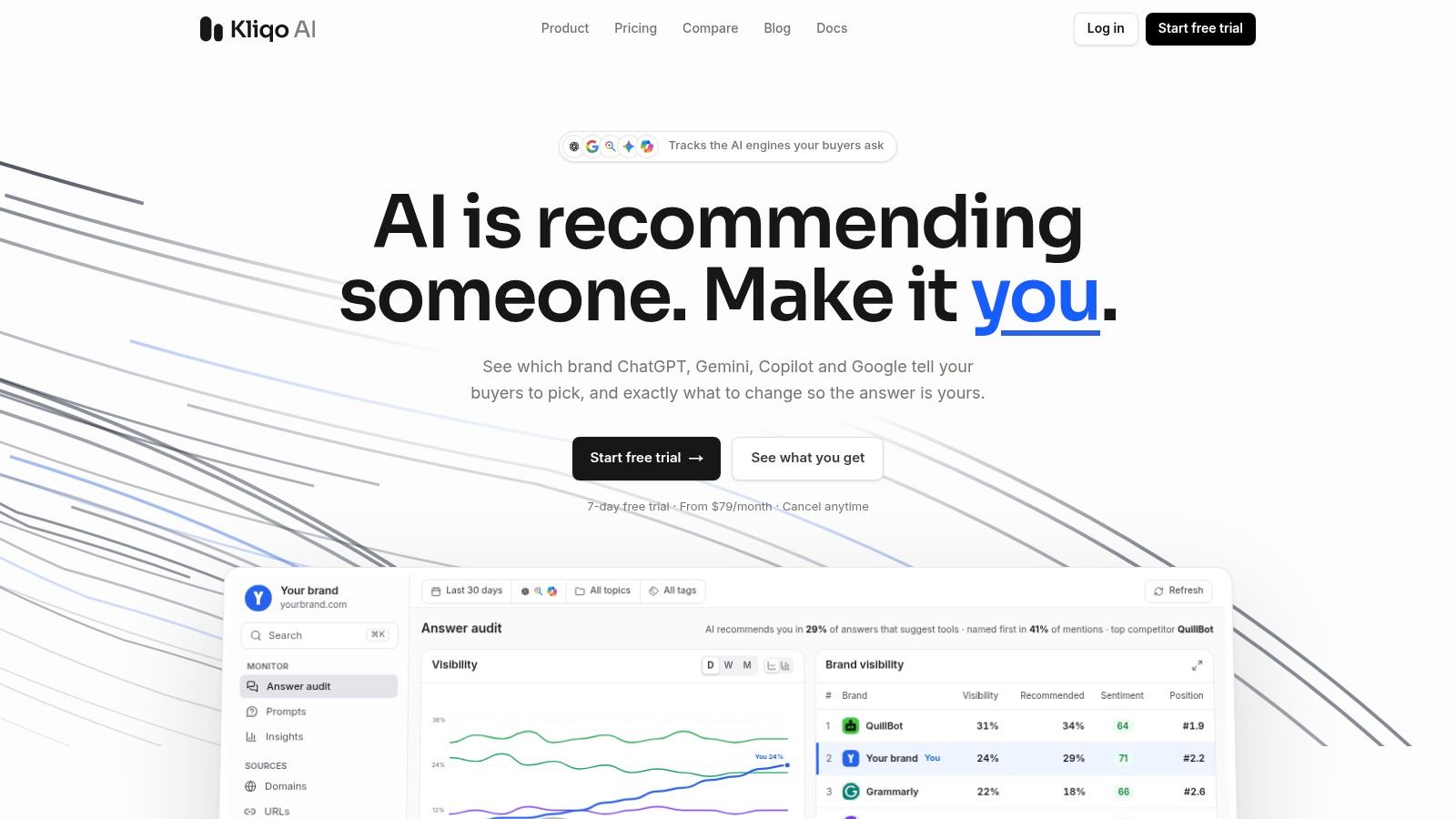
Kliqo AI is built around a distinction many dashboards blur. It separates a simple brand mention from an explicit recommendation, then records rank, sentiment, share of voice, cited sources and competitor appearances for buyer prompts run nightly.
Coverage spans ChatGPT, Google AI Overviews, Google AI Mode, Gemini and Copilot. It doesn't track Perplexity. Each plan includes three engines per project, and extra engines cost more. That's the central limit to price before a trial starts.
Evidence and follow-up work#
Suggested actions tie back to recorded answers, source domains and cited URLs. An action board and matched before-and-after reporting, including a 14-day view, help teams test whether a page update, comparison page or third-party listing changed results. Robots.txt checks, URL access tests, claim checks against brand profiles and referral reporting sit alongside the prompt data.
Reliability deserves that scrutiny. A 2026 SEO FOMO survey of 171 search professionals across 36 countries identified reliable AI search visibility measurement and causation as leading challenges. Preserved prompts, timestamps, full answers and missing observations matter more than a single precise-looking score.
- Starter: $79 a month for 50 prompts and one project
- Growth: $199 a month for 150 prompts and three projects
- Pro: $449 a month for 400 prompts and ten projects
- All plans: Unlimited members and a seven-day trial that requires a payment card
Current tiers are listed on the Kliqo AI pricing page. The trial test is specific. Run the same software buying prompts for seven nights, export the answers, and check whether recommendation share moves independently from mentions. The site doesn't publish customer testimonials or formal awards, so evidence quality has to carry the evaluation.
2. Otterly.AI#
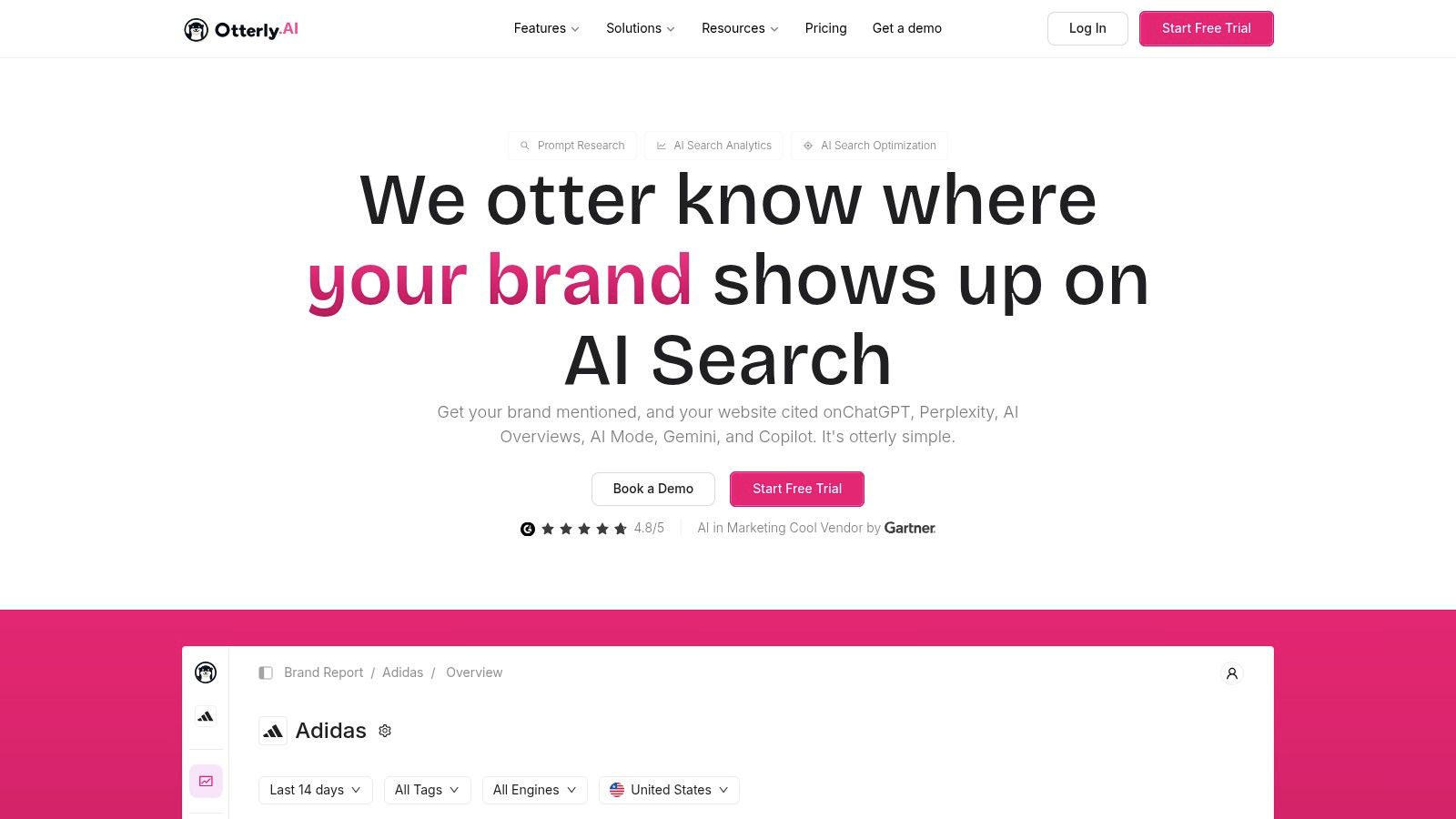
Otterly.AI suits a team that wants a focused AI search monitor without buying a full SEO suite. Daily prompt tracking covers visibility, sentiment and citation sources, with brand profiling and optimization recommendations.
The Lite plan includes ChatGPT, Google AI Overviews, Perplexity and Microsoft Copilot, but only 15 prompts. Claude, Google AI Mode and Gemini are paid add-ons. A low entry price can therefore rise quickly once the engine list matches the buyer's actual market.
Perplexity coverage has a clear use case. The Perplexity statistics compilation from Tools8020 reports growth from roughly 3,000 queries per day in 2022 to an estimated 30 million daily queries by 2025. A SaaS team whose buyers use answer engines for shortlist research shouldn't dismiss that surface only because it's smaller than ChatGPT.
- Strength: Daily monitoring and citation data on the entry plan
- Higher tiers: API and MCP access
- Limit: No traditional backlink or keyword rank tracking
Trial test: Price Lite with every required engine add-on before importing prompts. A cheap base plan isn't cheap if Gemini and AI Mode are mandatory.
Teams comparing focused monitors with suite add-ons can also review the wider field of AI brand monitoring tools before choosing a trial pair.
3. Rankscale#
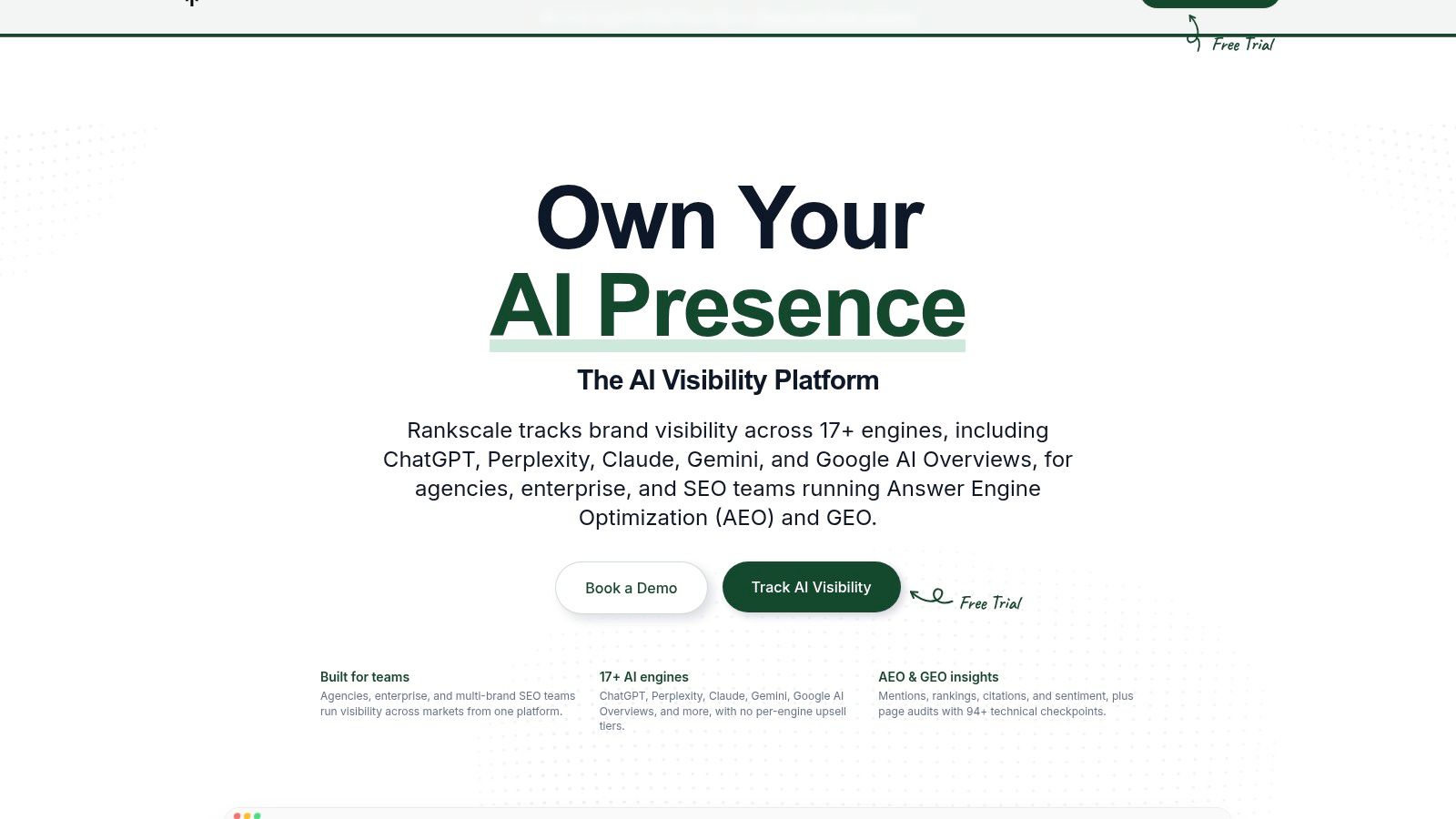
Rankscale takes a credit-based approach to AI visibility. That model gives teams control over cadence, but it makes prompt-for-prompt price comparisons harder than fixed prompt plans.
Tracking covers engines including ChatGPT, Gemini, Perplexity, Claude and Copilot. Reports include mentions, citations, sentiment and competitor performance. Prompts can run hourly, daily, weekly or monthly, subject to available credits, and regional tracking is available.
Regional controls aren't a cosmetic extra. The January 2025 Attest consumer adoption report covering 5,000 consumers found that 37% of UK consumers under 40 used AI for at least half of their internet searches. Retrieval and source choices can differ by market, so software prompts should run in the countries where pipeline originates.
What to verify#
- Credit burn: Calculate prompts multiplied by engines, regions and frequency
- Audit value: Paid plans include URL-level AI visibility audits
- Sharing: Dashboards can support internal or agency reporting
Credits make usage visible, but they also hide the effective monthly prompt count until a team models its schedule.
The practical trial is a spreadsheet exercise first. Price a fixed set of 40 buyer prompts at the required cadence, then compare that total with prompt-priced Peec AI alternatives. Higher-volume agency use costs considerably more than the entry tier.
4. HubSpot AEO#
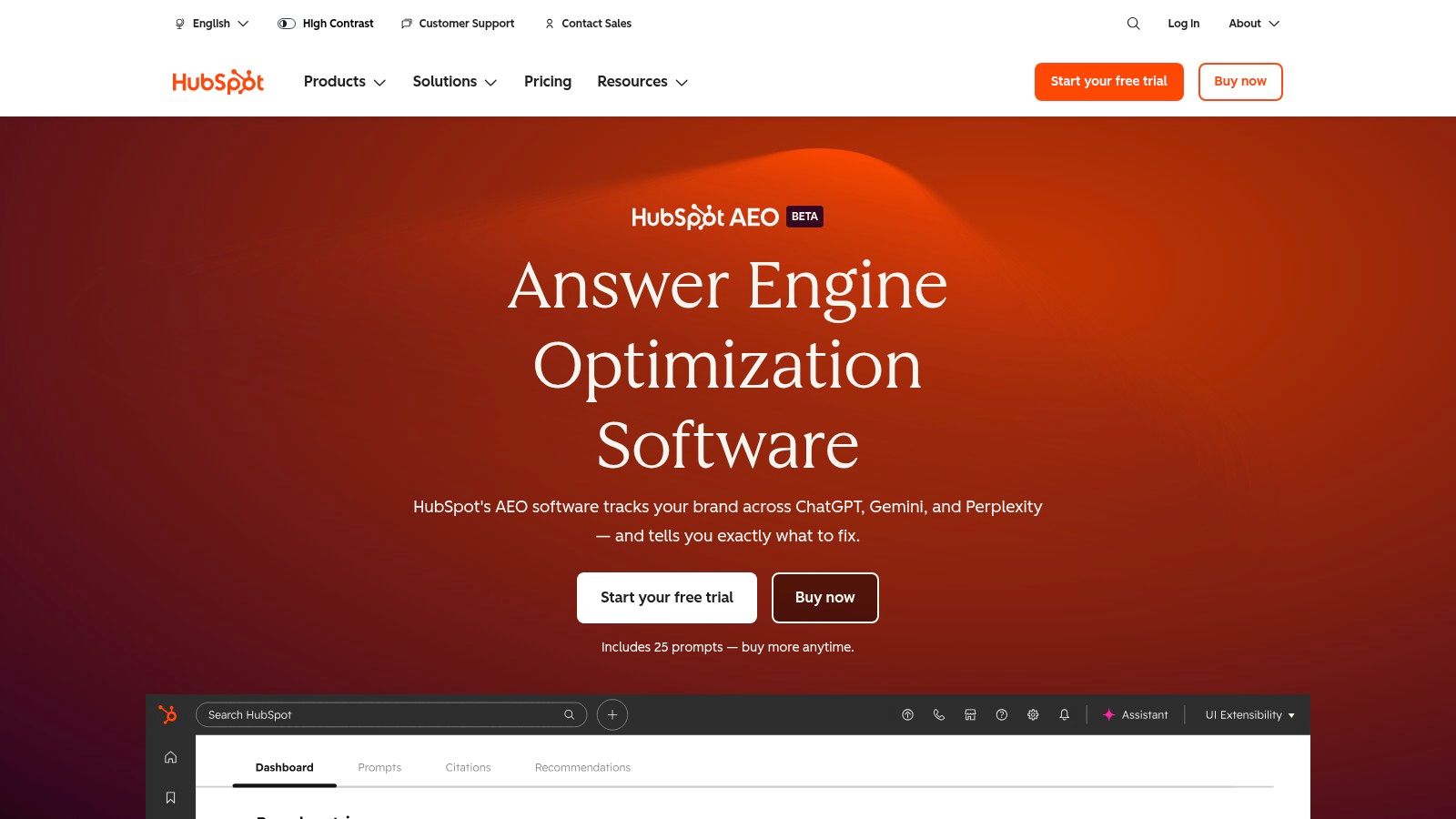
HubSpot AEO is the CRM-first option. It's sold as a standalone answer engine optimization product, so a team doesn't need another HubSpot subscription to start, but existing HubSpot users get the clearest workflow benefit.
Daily tracking covers selected prompts across ChatGPT, Gemini and Perplexity. The product reports brand visibility, sentiment, competitor performance and citation sources, then adds prompt suggestions and prioritized recommendations.
That narrow engine list is both the appeal and the limit. Base capacity is 25 prompts, which fits a single product category and a small competitor set. It won't stretch far across multiple SaaS use cases, pricing questions and integration comparisons without careful prioritization.
Buyer trust makes even a small prompt set commercially relevant. A 2025 Researchscape survey of 2,237 consumers commissioned by Yext found that 62% of consumers across the United States, United Kingdom, France and Germany trusted AI tools for brand discovery.
- Best fit: HubSpot teams connecting visibility findings to CRM and campaign work
- Limit: Only three engines in standalone tracking
- Gap: Less suitable where AI crawler diagnostics are a requirement
The trial test should follow one finding into an actual HubSpot workflow. If the citation gap can't become an owned content task with an owner and date, the CRM advantage is theoretical.
5. Semrush AI Visibility Toolkit#
Semrush AI Visibility Toolkit answers a different buying question than the specialist trackers. For a team already paying for Semrush, adding AI visibility to keyword, competitor and site audit work can cost less than a second subscription.
The toolkit tracks brand mentions across ChatGPT, Google AI, Gemini and Perplexity. Its listed Base plan includes 25 custom prompts with daily rankings, AI competitor analysis and prompt research. Site Audit adds AI-readiness checks, tying answer visibility to the crawlable pages an SEO team already maintains.
That bundle reflects buyer behavior, not just vendor packaging. In 2024, 81% of surveyed participants said chatbots had replaced search engines for some queries, according to Applause's 2024 generative AI survey of 6,361 people. Search habits now span both channels, which is why SEO suites are adding answer tracking alongside rankings.
Limits to price#
- Prompt volume: Base coverage suits a pilot, not a broad category map
- Trial access: Confirm current trial availability on Semrush's AI toolkit pricing page before committing
- Total cost: Extra users and broader reporting can raise the bill
A suite discount only counts when the SEO team already uses the suite daily. Otherwise, the AI module carries platform cost without platform value.
Price the decision on the loaded bill, not the add-on line. Compare the full Semrush cost against a dedicated monitor at the same 25 prompts, four engines and daily refresh. If the team rarely opens the keyword and audit modules, a standalone tracker usually prices lower per tracked prompt.
6. Ahrefs Brand Radar#
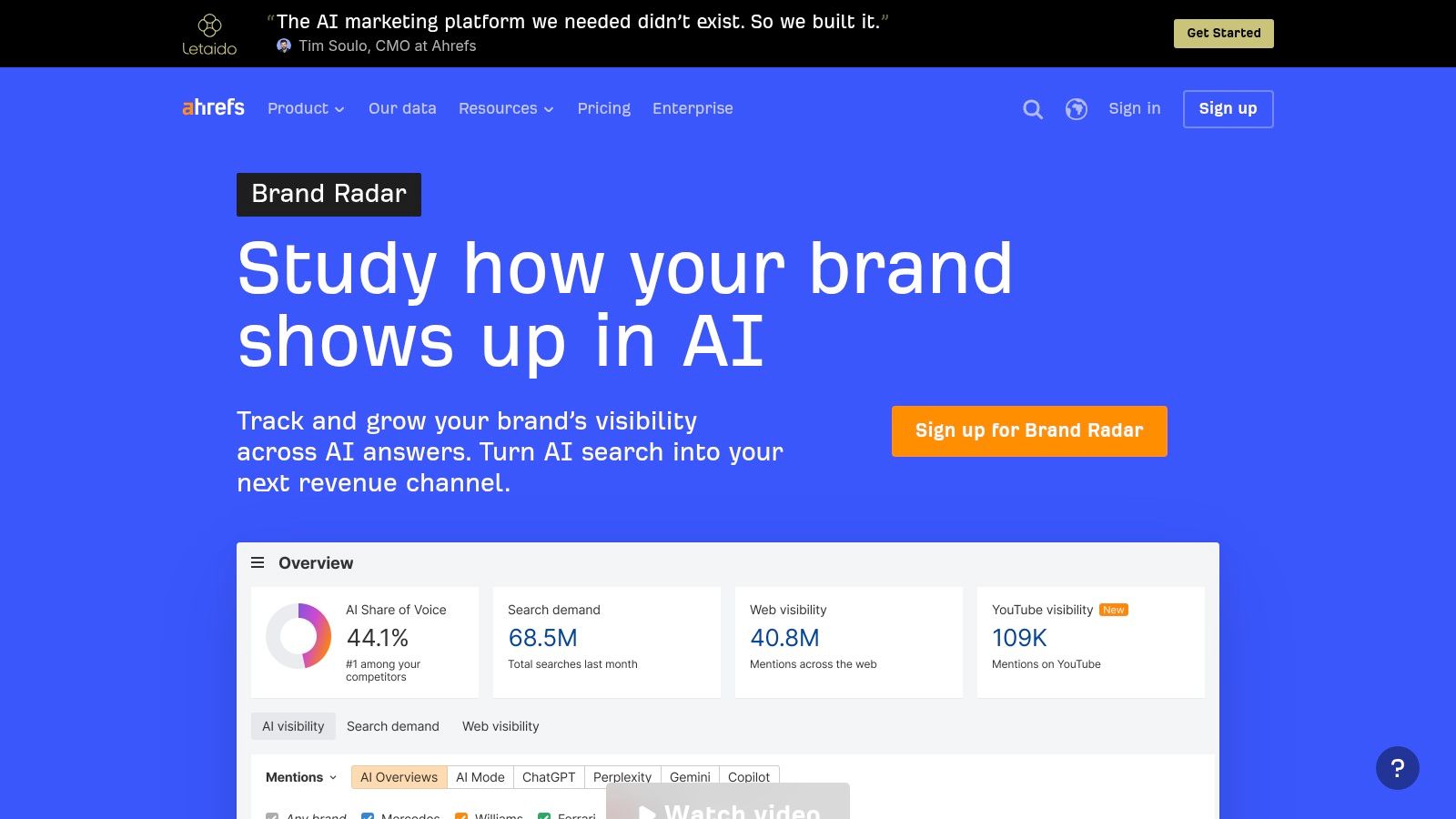
Ahrefs Brand Radar is strongest as a research product, not just a monitor for a handpicked prompt list. Search-backed prompt data supports category exploration, competitor share of voice and citation source discovery before a team commits to a fixed tracking set.
Custom prompt tracking sits beside that broader index, and visibility research extends beyond AI answers to YouTube and Reddit. For SaaS categories where review videos and community threads shape shortlists, that wider source view can reveal influence a prompt-only tool misses.
Fragmentation supports the research-first approach. The Sona AI search market share compilation reports 73.3% of AI search share for ChatGPT including Copilot, compared with 15.2% for Gemini, 5.8% for Perplexity and 4.5% for Claude. Those shares aren't interchangeable with other datasets, but they show why one engine can't represent the market.
- Strength: Large prompt dataset for category and competitor discovery
- Strength: AI visibility beside established Ahrefs SEO data
- Limit: All-platform access and custom tracking can become expensive
- Limit: Index research and custom prompt tracking are separate components
The Kliqo versus Ahrefs Brand Radar comparison is useful where the choice is nightly buyer prompt tracking against broad index research. Buyers who only need a low-cost standalone monitor should test whether the discovery depth will change content priorities.
7. Profound#
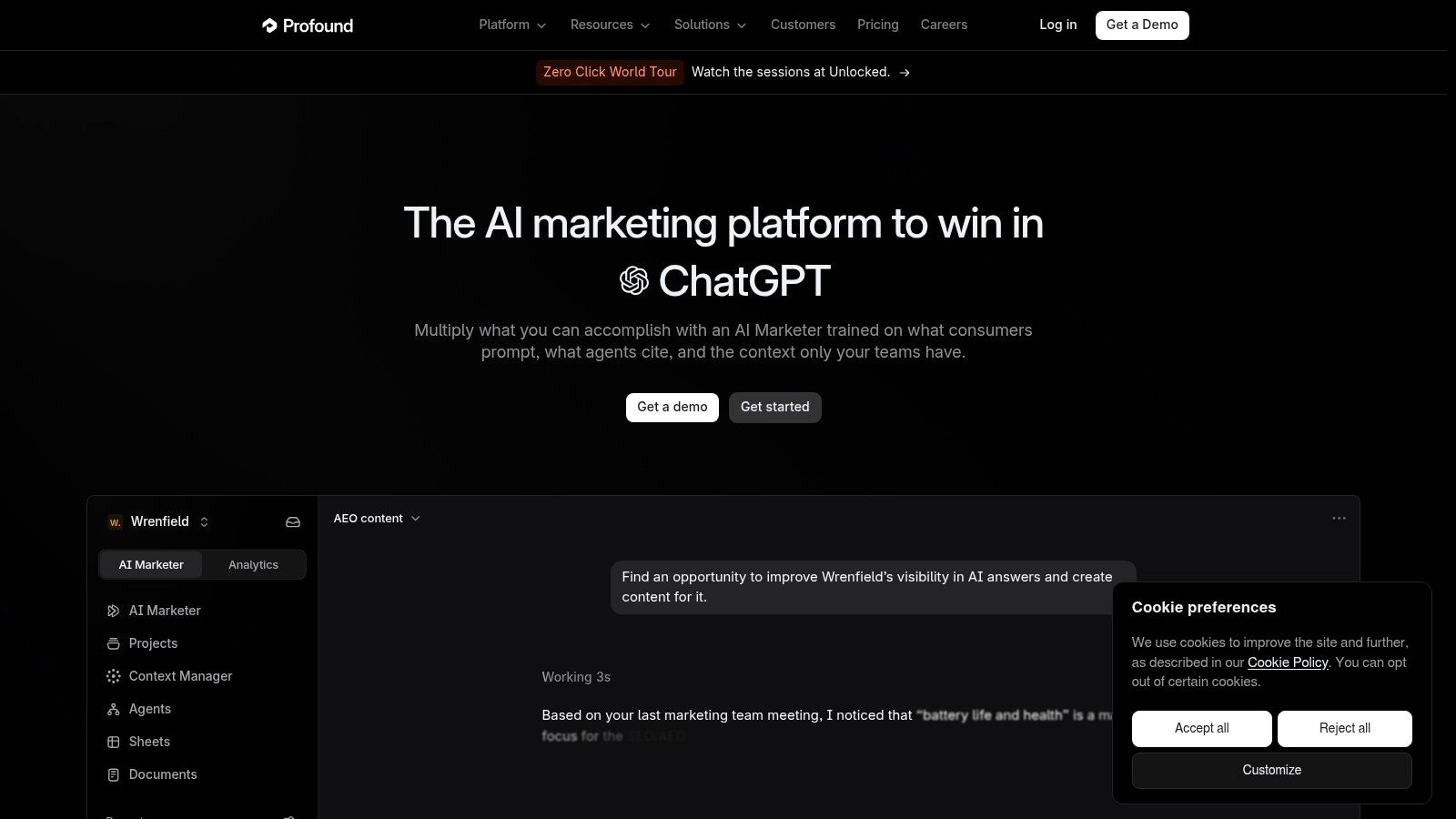
Profound targets organizations that need research, monitoring and optimization in one platform. Prompt-level visibility, rank, share of voice and citations sit alongside page-level citation analysis and content workflows.
Prompt research based on a large dataset of AI conversations addresses a common weakness in Peec AI alternatives. Teams often invent prompts that sound plausible but don't reflect how buyers phrase software comparisons, migration questions or integration requirements.
That distinction is growing. Google's AI Mode usage insights state that AI Mode queries are on average three times longer than traditional Search queries. Short keyword-style prompts can therefore produce clean charts that miss the detailed questions buyers ask.
Platform depth and cost#
- Agent Analytics: AI crawler activity and AI-referred traffic, subject to plan access
- Page analysis: Citation and content detail at URL level
- Enterprise fit: Multiple engines, regions and organizational controls
- Limit: Pricing and plan limits aren't fully transparent across offerings
Depth creates adoption risk. A small SaaS team may not staff the research, technical and content workflows Profound supports. Buyers weighing simpler options can review Profound alternatives and test one complete loop during evaluation, from prompt discovery to a page change and a later citation check.
8. Scrunch#
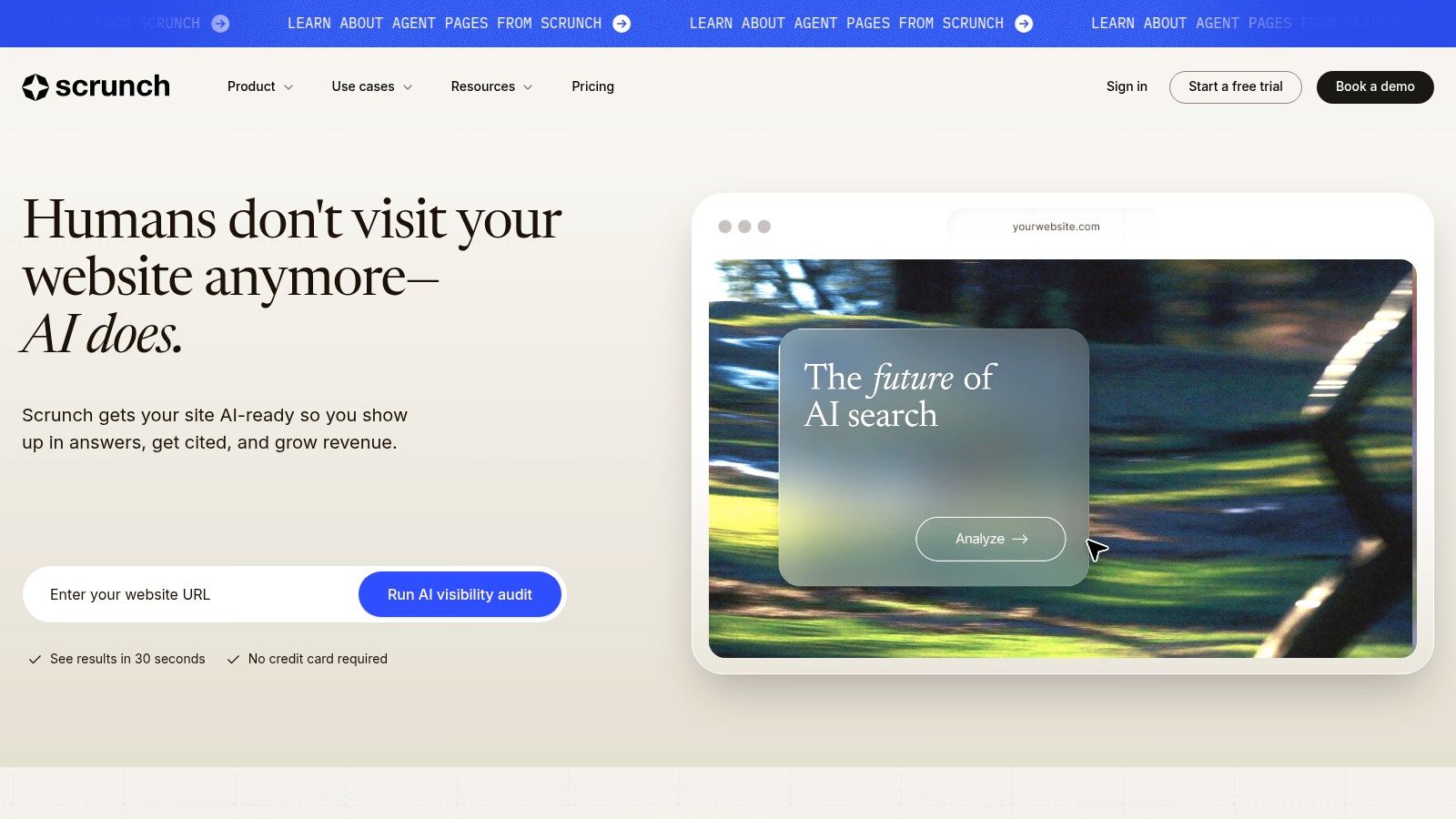
Scrunch pairs AI visibility monitoring with site audits, then separates brand and agency plans. That packaging serves in-house teams and agencies differently instead of forcing both into the same workspace model.
Scrunch's pricing page lists a Core brand plan with 125 unique prompts, one brand workspace and five site audits per month. Core tracks ChatGPT, Perplexity, Google AI Overviews and Microsoft Copilot. Enterprise adds more platforms, API access, integrations and SSO.
The audit allowance should drive the trial. Five audits can cover a homepage, a pricing page, two comparison pages and one integration page, which are often the pages AI systems need to read during software evaluation. A larger catalog exhausts that allowance quickly, so a team with hundreds of product or feature pages should spend its trial audits on the URLs most likely to appear in buyer research.
Commercial intent also needs segmentation. An IAB study combining more than 450 recorded AI shopping sessions found that 46% of AI shoppers used AI most or every time they shopped in 2025. Prompts about pricing, alternatives and implementation shouldn't be averaged together with early discovery questions.
- Strength: Published plan tiers and a seven-day Core trial
- Strength: Agency-specific plans
- Limit: Core covers four AI platforms
- Limit: Enterprise pricing requires a sales conversation
Scrunch fits buyers who want monitoring and site auditing under one contract. Teams that only need answer tracking end up paying for audit capacity they won't use.
9. Surfer AI Tracker#
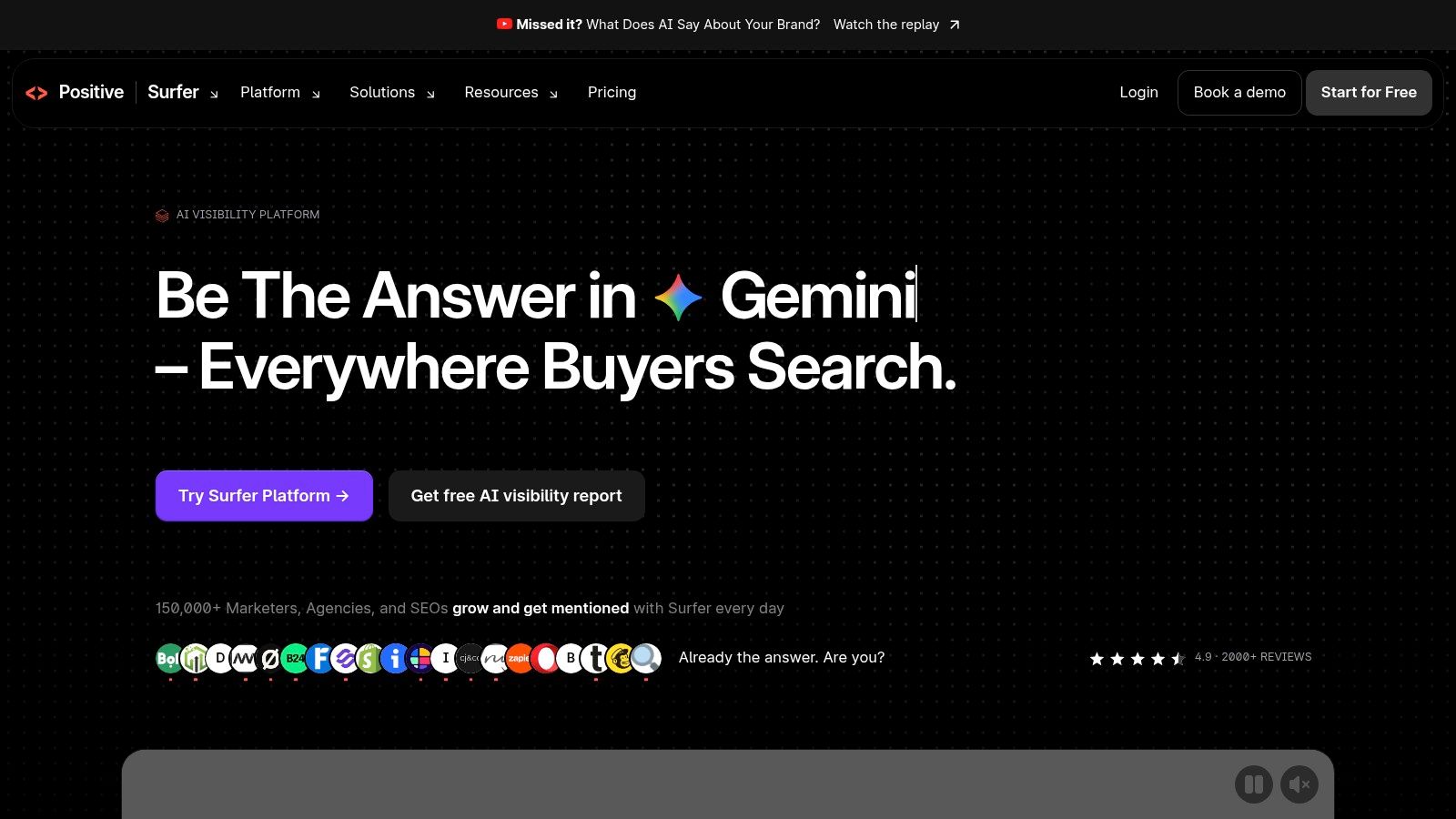
Content teams already inside Surfer have the clearest reason to test Surfer AI Tracker. It connects AI answer monitoring with the content optimization workflow those teams use to revise pages.
Tracked data refreshes daily. Coverage includes ChatGPT, Gemini, Perplexity and Google AI features, with reporting for brand mentions, page mentions, competitor citations and cited domains. Page-level results help a SaaS content team see whether a comparison page earns citations while a feature page doesn't.
The product isn't positioned as a broadly independent monitor. Availability comes through an add-on or selected Surfer plans, and prompt limits depend on the tier or add-on purchased. A buyer without Surfer has to evaluate the content platform too, not just the tracker.
Practical trial#
- Select: Ten prompts where a competitor page is cited and the tracked brand isn't
- Revise: One crawlable comparison page using the source and content gap evidence
- Record: Daily mention, citation and cited-domain results before and after publication
- Stop rule: Don't credit the revision if prompt wording or tracked engines changed mid-test
Daily data helps only when the prompt set stays stable long enough to separate a real movement from ordinary answer variation.
Teams needing crawler analytics, broad governance or extensive enterprise controls may still need another platform. For an active Surfer team, the shorter path from finding to edited page is the main reason to pay.
10. AthenaHQ#
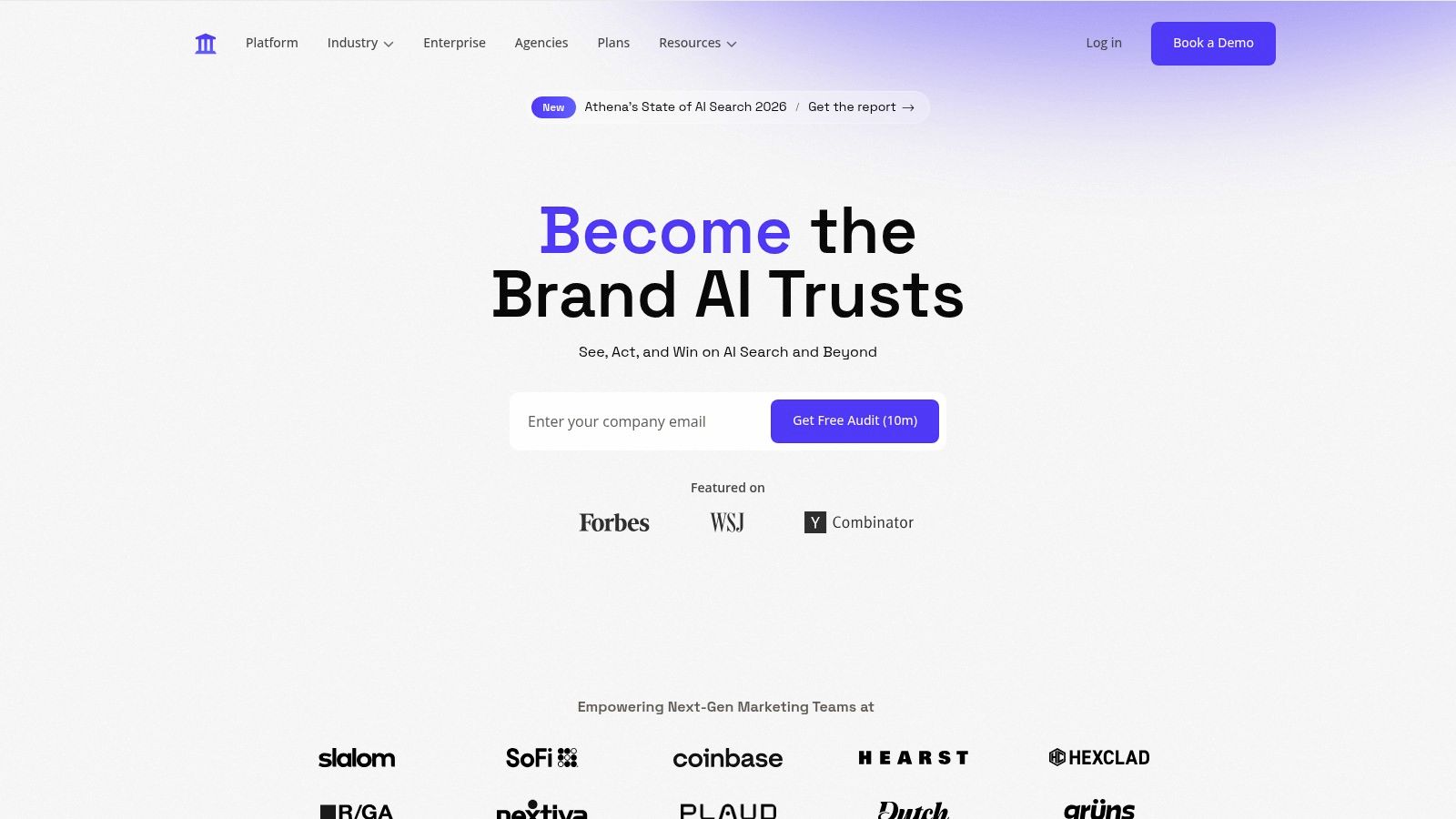
AthenaHQ combines monitoring with recommendations and content optimization. A free Essential plan lowers the cost of a first look, while the paid Starter plan expands model coverage substantially.
Essential includes 300 credits with prompt and response analysis. Starter lists visibility across 11 models, plus competitor insights, source data and content recommendations. Higher tiers add multiple countries, citation tooling and integrations.
Credits are the main comparison problem. Usage determines how many prompts or answers a team receives, so a buyer can't compare Starter directly with a fixed 50-prompt or 150-prompt plan without modeling engines, countries and refresh frequency. API access and extra credits are paid add-ons rather than part of the listed Starter price.
- Strength: Free plan for initial product evaluation
- Strength: Broad engine coverage on the paid plan
- Strength: Recommendations and an optimization agent beside monitoring
- Limit: Starter is a relatively high monthly commitment
The free-plan test should be narrow. Spend credits on decision-stage software prompts, preserve the responses, and calculate the paid cost of running that same set daily for a month. Broad engine coverage has value only when each added engine reaches real buyers or produces materially different recommendations and cited sources.
How the Peec AI alternatives compare on entry price, engine coverage and best fit#
| Item | Entry price | Engine coverage | Best for |
|---|---|---|---|
| Kliqo AI (recommended) | From $79/month | ChatGPT, Google AI Overviews, Google AI Mode, Gemini, Copilot; three included per project | Teams tracking explicit recommendations, sources, and the impact of optimization work |
| Otterly.AI | Low-cost entry; price not stated | ChatGPT, Google AI Overviews, Perplexity, Copilot; other engines are add-ons | Teams seeking focused, daily AI visibility monitoring |
| Rankscale | Entry price not stated | ChatGPT, Gemini, Perplexity, Claude, Copilot | Teams needing flexible tracking schedules and regional monitoring |
| HubSpot AEO | Price not stated | ChatGPT, Gemini, Perplexity | HubSpot users connecting AI visibility insights to CRM workflows |
| Semrush AI Visibility Toolkit | Price not stated | ChatGPT, Google AI, Gemini, Perplexity | SEO teams combining AI visibility research with Semrush tools |
| Ahrefs Brand Radar | Price not stated | Multiple AI platforms; exact coverage not specified | SEO teams researching category and competitor visibility at scale |
| Profound | Pricing not fully stated | Multiple engines; specific coverage varies | Organizations needing research, citation analysis, and content workflows |
| Scrunch | Paid entry pricing; amount not stated | ChatGPT, Perplexity, Google AI Overviews, Copilot on Core | In-house teams and agencies pairing monitoring with site audits |
| Surfer AI Tracker | Add-on or selected Surfer plans; price not stated | ChatGPT, Gemini, Perplexity, Google AI features | Existing Surfer users connecting visibility tracking with content optimization |
| AthenaHQ | Free Essential plan; paid Starter price not stated | Starter covers 11 models | Teams seeking broad engine coverage and optimization recommendations |
Shortlist Two Tools and Test Them Before You Commit#
A sound shortlist contains two tools, not ten. One should match the primary workflow, such as nightly recommendation tracking, SEO suite reporting or crawler diagnosis. The second should challenge the first on evidence quality or total cost at the same prompt volume.
Normalize the units before comparing prices. Convert credits, checks and add-on engines into one monthly scenario, for example 40 buyer prompts, three engines, one country and daily runs. Add required users, projects, API access and extra credits. Several Peec AI alternatives look inexpensive until the buyer's actual engine list is priced.
Build the prompt set from software buying behavior. Include category discovery, head-to-head comparisons, pricing constraints, integrations, migration questions and prompts naming a specific use case. Avoid generic how-to questions that produce advice without naming products. Each prompt should force an answer to recommend, rank or exclude brands.
Run both trials at the same time with identical wording, countries and competitor lists. Record whether the brand is mentioned, explicitly recommended, ranked first or merely cited as a source. Save the full answers and cited URLs. Missing observations should remain missing, not become zeroes that create a false decline.
Decision rule: Choose the tool that explains a lost prompt with a cited source, a competitor page and a fixable action. A visibility score without that evidence doesn't tell a content team what to do Monday morning.
Check access before blaming content quality. The AI crawler checker shows whether major AI crawlers can read a site, covering robots.txt health, the sitemap and the homepage without JavaScript. The AI page audit then helps isolate page-level problems on pricing, feature and comparison pages.
Act on one gap during the trial. Make a key page crawlable, clarify product claims, publish a direct comparison page or pursue a relevant third-party software list that AI answers already cite. Keep every other tracked prompt unchanged, then compare matched periods after the work ships.
Write down baseline recommendation share, citation share, first-place rate and AI referral sessions before paying annually. Visibility without qualified visits may still matter for awareness, but it shouldn't be reported as pipeline. The right tool is the one that keeps those numbers separate, preserves the answers behind them and shows which competitor source to displace next.
Kliqo AI tracks nightly buyer prompts across ChatGPT, Google AI Overviews, Google AI Mode, Gemini and Copilot, separating explicit recommendations from mentions and linking gaps to cited sources. Teams comparing Peec AI alternatives can inspect plans, evidence handling and before-and-after reporting at Kliqo AI before starting a seven-day trial.